
How often should you change your mattress? As a guide, after eight to ten years, but the condition of the mattress is what matters, not the date on the invoice. The following five signs will tell you whether yours has reached the end of its life.
A mattress wears out gradually, which is precisely why few people notice its end in time. The body gets used to the sagging spot, morning stiffness in the back sets in, and a person puts it down to age or the weather. The question „how often to change a mattress“ therefore doesn't have an answer in the calendar, but rather in what the mattress is still capable of doing — how it holds its shape, how it responds to pressure, and how one sleeps on it after six hours, not after five minutes in a showroom.
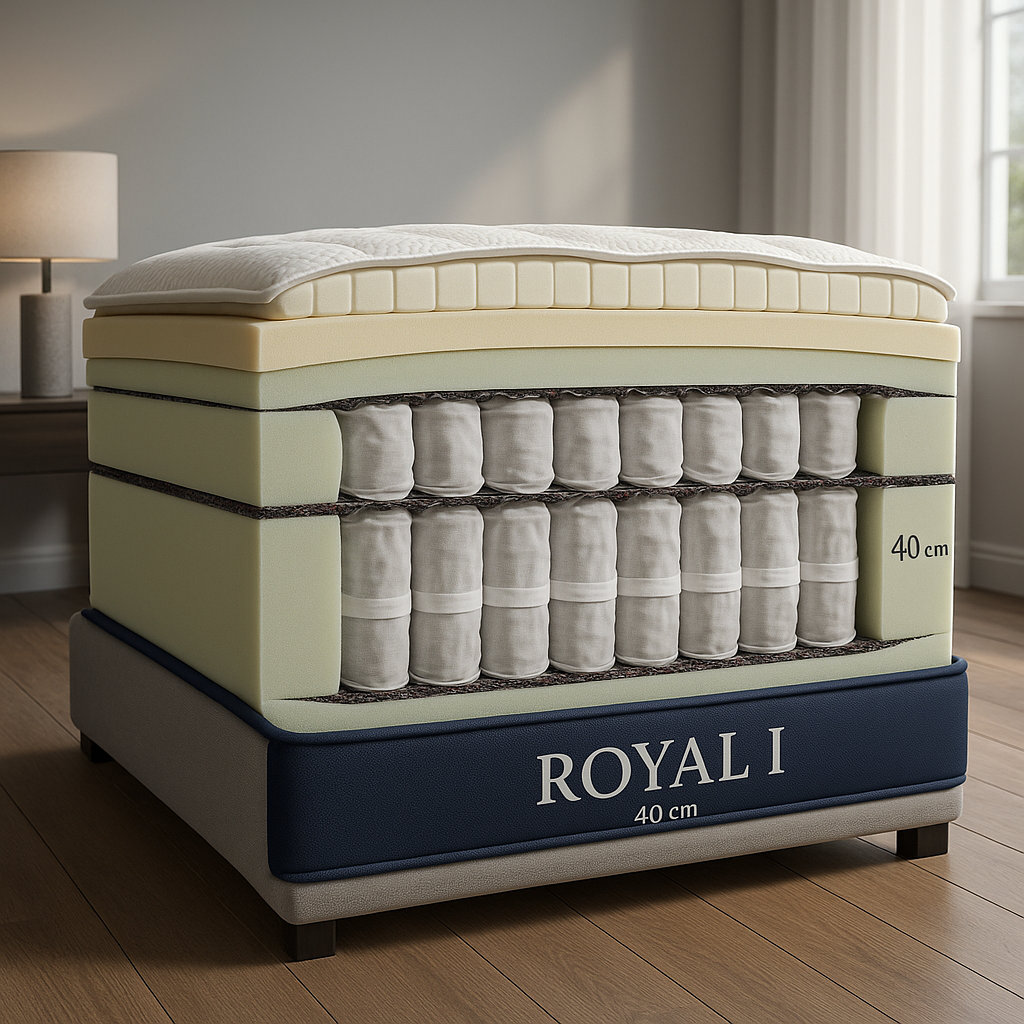
How often to change your mattress depending on type and construction
Lifespan varies depending on the core material and how the mattress is constructed. Take the following ranges as a guide — deep mattresses over 24 cm the upper limit is shifting higher because the load is distributed over a larger volume of material.
| Mattress type | Estimated lifespan | What wears out first |
|---|---|---|
| Pocket springs with foam encasement | 10–12 years | Comfortable foam layers above the core |
| Latex core | 10–12 years | Surface elasticity, edges |
| Memory foam | 7–10 years | Rate of return to shape |
| Cheaper polyurethane foam | 5 to 7 let | Core density — the mattress will sag„ |
| Topper 5–10 cm | 3–5 years | The whole layer is closest to the body |
The five-year warranty we offer on mattresses from our Czech production applies to the construction and materials. This does not mean that the mattress comes to an end in its sixth year — for a well-built core, that is more like the halfway point.
Five signs that your mattress has reached the end of its life
One signal on its own means nothing. When two or more come together, it is time to start looking around.
- Visible sagging where you sleep. The test is simple: strip the bed linen, place a straight slat or a long ruler across the bed on the mattress and look underneath it. A gap of more than two centimetres means that the core is no longer working across its entire surface.
- You wake up feeling stiffer than the night before. When tension in the back, hips or shoulders goes away within an hour of moving around, it indicates a lack of support in a specific zone. Proper spinal support helps prevent this tension — a sagging mattress cannot provide it.
- You sleep better elsewhere. Hotel, cottage, visiting parents. If you feel more rested after a weekend away from home, it is not due to the novelty of the environment.
- The mattress is noisy or moves when the partner moves. The squeaking heralds tired springs, and the transfer of movement to the other side of the bed indicates loosened separation of the individual pocket springs.
- Worsened breathing or itching in bed. Over ten years, a mattress absorbs a significant amount of moisture and becomes a home for dust mites. For more sensitive sleepers, this is noticeable first. A cover that cannot be removed and washed makes the whole situation worse.
If you only half recognise yourself in the list, you don't need to go shopping straight away. Sometimes a minor intervention is enough — and that is what the following section is about.
When is it enough to replace just a topper and when the whole mattress
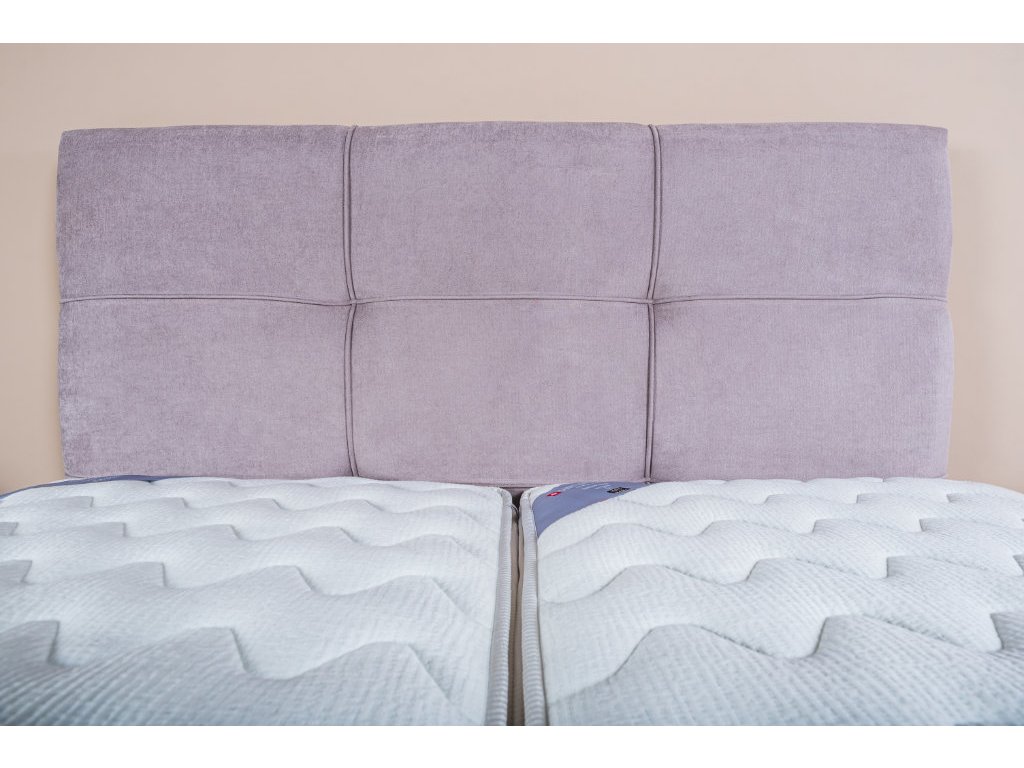
A topper is a sacrificial layer. It lies closest to the body, takes on sweat and mechanical wear, and is replaced many times more often than the mattress beneath it. That is its purpose, not a weakness.
The decision rule is simple:
- The core holds its shape, the discomfort is only on the surface — change the topper. You can find the selection in the category toppers and you will notice the difference on the very first night.
- The sag is deeper than two centimetres or the mattress makes a noise — a mattress topper won't fix that. It just layers comfort over unsupportive foundations and merely postpones the problem.
- The mattress is new, but the firmness isn't right. — a topper will help here, as it can soften the firmness by half a grade.
What shortens the lifespan of a mattress
A mattress ages faster than it needs to for four reasons. All of them can be influenced.
- Inappropriate sub-base construction. A sprung slat base will transfer its shape to the mattress within a season. A box spring or solid base distributes the load evenly.
- Sleeping always in the same place. With a double bed with two separate mattresses it is inevitable, which makes regular rotation all the more important.
- Dampness. Overnight, the body evaporates several decilitres of moisture. Without ventilation, it ends up in the core.
- Loading beyond design capacity. Every mattress has a weight limit for the sleeper — for our models, this is typically up to 130 kg. Above this, the foam layers sag significantly faster.
Rotation and turning — what applies to deep mattresses
The older rule of turning the mattress upside down now only applies to symmetrically constructed models. Tall mattresses with a top comfort layer are not turned upside down, but rotated from head to toe, specifically every three months in the first year, and then twice a year. You will best keep the habit if you associate the rotation with changing your summer and winter bedding.
For everyday protection, it is worth washing the cover if the design allows (the Modena cover is removable and withstands a 40 °C wash), and supplementing it with mattress protector. This traps moisture before it reaches the core, and replacing it takes just one wash cycle.
How to choose a new mattress when your old one is on its last legs
The most common mistake when replacing it is to buy the exact same thing as before. Over ten years, your weight, sleeping position, and how sensitive your shoulders and hips are have all changed. Therefore, start from the body, not the model.
- Location. Side sleeping requires the mattress to give at the shoulder and support the waist. A five-zone or seven-zone spring system can manage this, whereas a flat foam slab cannot.
- Mass. The higher, the firmer the mattress, and the more important the reinforced side of the foam core that you lean on when getting up.
- The difference between partners. For a difference of over 30 kg, two separate mattresses with different firmness levels and a shared topper across both are worth it.
- Cover according to sensitivity. Purotex is impregnated with natural probiotics that eliminate allergens, Royal Silver works with silver fibres against bacteria and odours, and Linen is hypoallergenic and gentle on sensitive skin.
Most sleepers end up with medium-firm mattresses, which also includes the Royal I, Royal II and Luxury models. Anyone who needs firmer support will find it among with firm mattresses. The entire product range, including the hardness filter, is in the category mattress.
Are you unsure if it's the right time?
This lateness test and five signals above can be managed at home in ten minutes, and usually that is enough to make a decision. If you are not sure about the result, come and lie down — at the showroom at Vinohradská 37/13 in Prague 2 or in Hradec Králové you can try out several firmness levels in succession, which is impossible to replicate from home. We will also gladly go through what you have now and tell you whether it still makes sense to keep it.
You can also consult remotely. Our advisor Petr Žák is available by phone 725 708 777 or on zak@royalcomfort.cz; further answers can be found in the section consultancy.